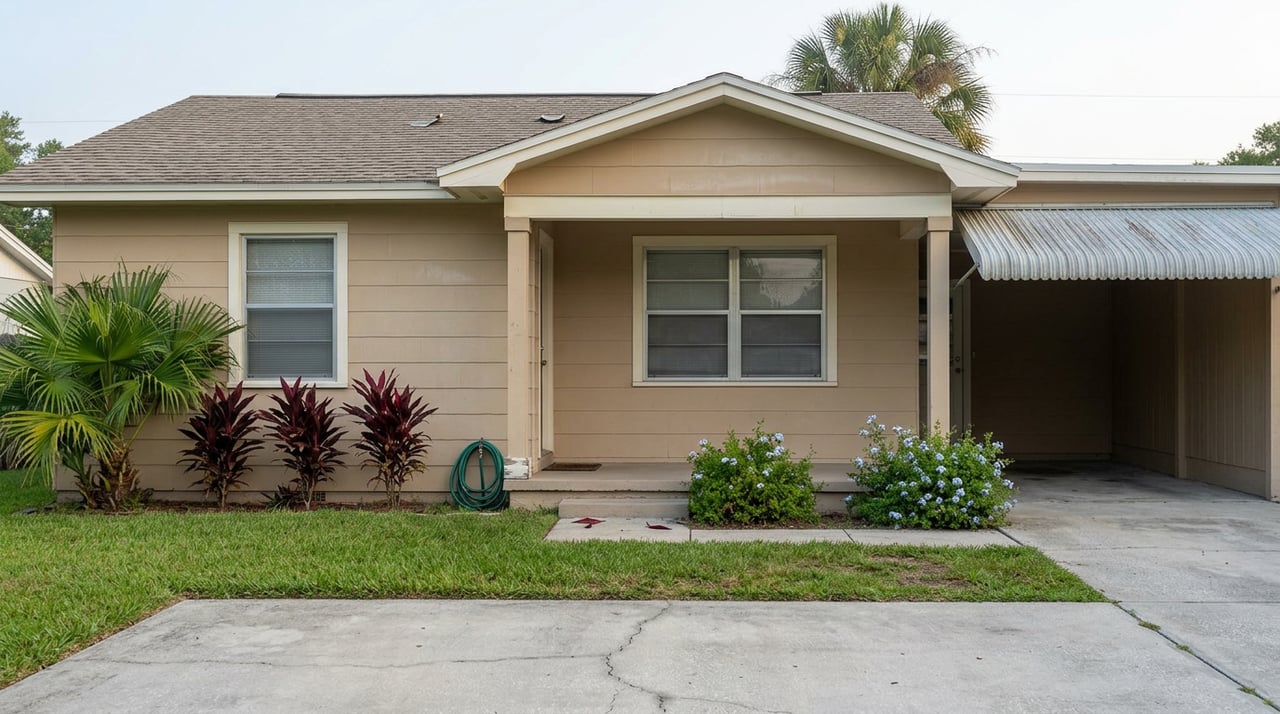
Picture two homes three streets apart in the older, unsewered pocket of Ewa Beach near Puuloa Beach Park. Same decade built, same lot size, same cesspool tucked under the same kind of concrete slab. On the Hawaii Seller's Real Property Disclosure Statement, both sellers check the identical box: cesspool, yes. A buyer reading those two forms side by side would have no reason to treat one house differently than the other.
They should. One of those homes sits inside a boundary the City and County of Honolulu drew years ago and is actively building sewer pipe toward right now. The other doesn't. That line, not the checkbox, is what actually determines whether a new owner is looking at a five-figure bill with a real deadline or a statewide 2050 mandate that's still mostly theoretical for most homeowners.
What the disclosure form doesn't capture
Hawaii Revised Statutes Chapter 508D requires sellers to disclose material facts about a residential property, and the standard form specifically asks whether a home relies on a cesspool, where it's located, and when it was last pumped. Once a buyer receives that disclosure statement, they have 15 calendar days to review it and, if something material changes their calculus, walk away and get their deposit back.
That's a real legal mechanism, and it matters. But the form treats "cesspool" as a single condition rather than a spectrum of urgency. A cesspool with no sewer project anywhere nearby and a cesspool sitting three blocks from an active, funded sewer extension are legally the same checkbox and financially very different situations.
Why proximity to one plant changed everything for one section of Ewa Beach
The reason Ewa Beach has become a focal point at all traces back to simple geography. The Honouliuli Water Recycling Facility sits right there, and Honolulu's Department of Environmental Services has said plainly that its sewer-extension priorities follow existing treatment plant infrastructure, not a ranked list of which cesspools pose the worst environmental risk. When Honolulu Civil Beat reported on the proposal in 2023, the department's director, Roger Babcock, said the concentration of unsewered homes near Honouliuli made this specific section of Ewa Beach "prime territory" for what the city calls a sewer improvement district, officially designated Ewa Beach Sewers, Section 4.
The city's own six-year capital improvement budget, released in 2025, lists that district's numbers plainly: 979 unsewered lots, a total project budget of roughly $79 million, work that began in December 2020, and a targeted completion window running through June 2029. When the project was first proposed back in 2023, the city had put the figure at about 976 homes, close enough that the small shift just reflects a project that's moved from proposal to active construction.
Here's the part that catches sellers off guard: once that pipe reaches a property line, city law requires the homeowner to connect. It isn't optional, and it isn't on the 2050 timeline anymore. It becomes the resident's bill, on the city's schedule, whether or not the household is ready for it.
Same cesspool, two very different timelines
| Inside the current improvement district | Outside it, same cesspool | |
|---|---|---|
| Sewer connection | Mandatory once the line is live | Not required |
| Governing deadline | City project schedule (targeted through 2029) | Statewide 2050 mandate |
| Estimated cost to homeowner | $8,500 to $10,000 for the connection itself | $20,000 to $50,000 for a full septic or aerobic system, if conversion is pursued independently |
| Who sets the timing | The city's construction schedule | The homeowner, within the 2050 window |
That cost gap is worth sitting with. A mandatory sewer hookup runs a fraction of what a standalone septic conversion costs statewide, according to the roughly $30,000 figure Ted Bohlen, a retired deputy attorney general who worked in the Department of Health's water branches, gave KHON2 for a typical independent upgrade. The city's own project is, in a strange way, the cheaper outcome for the households caught inside its boundary. It's just not optional, and it's not on their timeline.
One resident quoted by Civil Beat, Rob Umiamaka, put the tension plainly when he described the connection cost as pricing people out of a neighborhood he and his cousin had chosen specifically for its affordability. Another homeowner in the broader Ewa area, Iris Higgins, told KHON2 her family sealed their own cesspool decades ago while waiting on a sewer connection the city had promised and never delivered, only learning recently that a formal 2050 deadline even existed. Neither story is unique. They're the two most common positions a seller in this pocket of Ewa Beach can find themselves in: already caught by an active project, or still waiting and unaware one might eventually reach them.
The state just put real money behind the mandate
For years, homeowners facing conversion costs had one thin option: a Department of Health grant program launched in 2022 that offered up to $20,000 per household. It was popular enough that the entire $5 million allocation was claimed within a week of launch, which tells you more about the size of the problem than almost any other number in this space.
That changed this summer. In July 2026, Governor Josh Green signed House Bill 1618, establishing a Cesspool Conversion Revolving Loan Fund to be administered by the Hawaii Green Infrastructure Authority, the same agency that has historically financed solar and clean energy projects. Lawmakers also introduced House Bill 2079 in the 2026 session to reinstate a state income tax credit worth 35 percent of qualified conversion expenses, up to a capped amount, which would apply to expenses incurred in tax years after 2026 if it becomes law. Neither program is guaranteed to move as fast as a homeowner facing an imminent connection deadline needs it to, and eligibility details are still being worked out at the state level, so anyone counting on this financing should confirm current terms directly with the Hawaii Green Infrastructure Authority or a tax professional before writing it into a closing timeline.
What to actually ask before you list or make an offer
If you're selling a home in this part of Ewa Beach, the disclosure form is the floor, not the whole conversation. Before you list, it's worth finding out:
- Whether your parcel falls inside the current Section 4 Improvement District boundary or any adjacent phase the city has mapped
- When the nearest active sewer line construction is scheduled to reach your street, based on the city's published project timeline
- Whether your cesspool has ever been evaluated under the Hawaii Cesspool Prioritization Tool, which the University of Hawaii and Department of Health maintain as a public, address-searchable map
If you're the one making an offer, ask the same questions in reverse. A seller who can answer them clearly, rather than just pointing to a checked box, is giving you a much more honest picture of what you're inheriting and when.
None of this is legal or tax advice, and the specific dollar figures and program rules are the kind of thing that shift as the city and state work through funding cycles. But knowing which questions to ask, and knowing that Ewa Beach specifically has an active, dated, city-funded project running through it right now, is the difference between a disclosure conversation that moves a sale forward and one that stalls it at inspection.
Frequently asked questions
Does every home in Ewa Beach have a cesspool? No. Oahu has far fewer cesspools than the neighbor islands, and most of Ewa Beach's newer subdivisions are already connected to city sewer. The pocket discussed here is specifically the older, unsewered section closer to Puuloa and the Honouliuli plant.
If my home is outside the current improvement district, am I in the clear? Not entirely. The statewide 2050 deadline under Act 125 still applies to every cesspool in Hawaii regardless of whether a city project is nearby. Being outside the current district just means your connection isn't on a near-term, city-imposed schedule yet.
Will disclosing a cesspool scare off buyers? It shouldn't, if it's framed accurately. Buyers, lenders, and appraisers are increasingly used to asking about wastewater systems in Hawaii. A seller who can point to the specific project timeline, rather than just the checkbox, tends to keep the transaction moving.
If you're weighing a sale or purchase in this part of Ewa Beach and want a clear read on how your specific parcel lines up with the city's project boundary, List With Fran Mag can help you get a free home valuation or set up a consultation to walk through what it means for your timeline and your price.