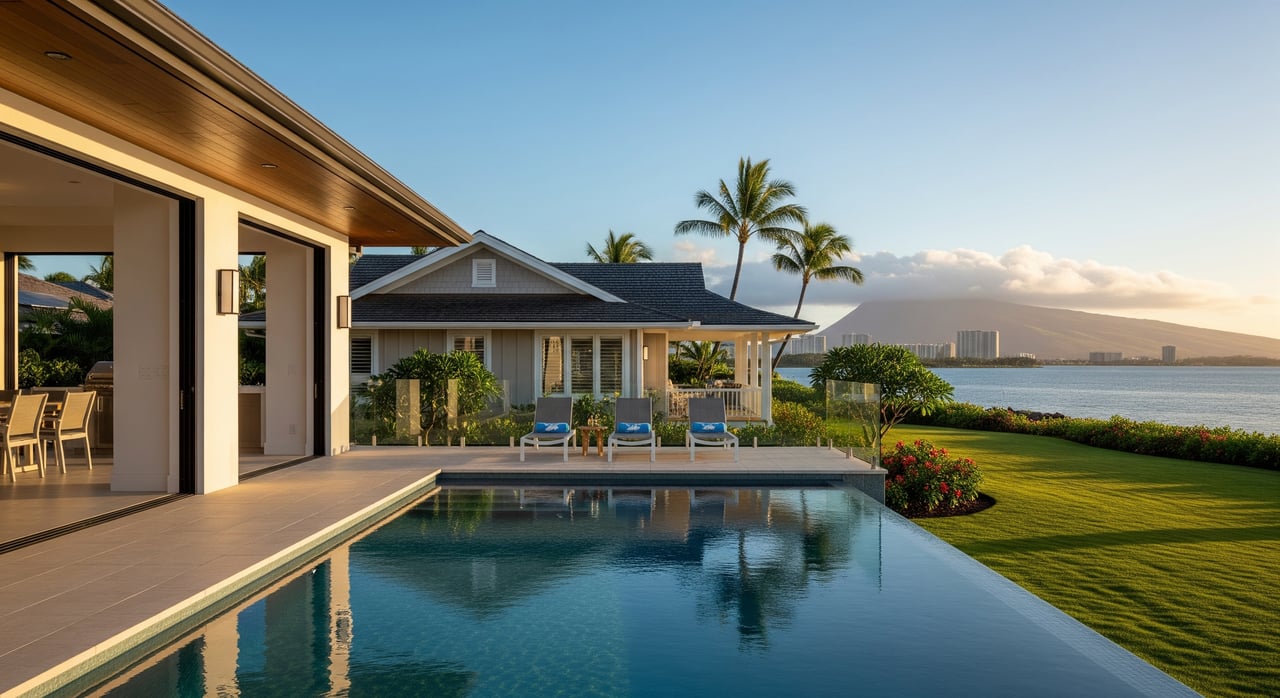
Thinking about buying in Kapolei and torn between a brand‑new build and a well‑loved resale? You’re not alone. West Oʻahu’s “Second City” offers both shiny new communities and established neighborhoods, each with tradeoffs in cost, timing, upkeep, and long‑term value. In this guide, you’ll learn how new construction and resale compare in Kapolei so you can choose what best fits your timeline, budget, and lifestyle. Let’s dive in.
New vs resale at a glance
- New construction can deliver modern layouts, energy‑efficient systems, and builder warranties. You’ll often pay a premium and may wait longer to move in.
- Resale can offer more space for the price, faster closings, and mature neighborhoods. You may inherit near‑term maintenance or renovation needs.
- In Kapolei, commute patterns, HOA rules, and master‑planned amenities often shape the decision as much as the house itself.
Price and total cost
New construction
New homes in Kapolei are commonly priced at a premium per square foot because you’re getting contemporary finishes, new systems, and builder margins. Builders sometimes offer incentives such as closing cost credits, rate buydowns, or upgrade packages that can offset part of that premium. Always confirm what’s included in the base price. Appliances, window coverings, landscaping, driveways, fencing, and even some utility hookups can be add‑ons. Many neighborhoods also charge lot or view premiums for specific locations.
Resale
Resale homes may provide more square footage or larger lots at a lower price per foot. You might also have more room to negotiate, depending on days on market and local conditions. Keep an eye on near‑term costs. Older roofs, HVAC, plumbing, or termite treatment can change the true cost of ownership. A thorough inspection and review of seller disclosures helps you budget realistically.
Timing and process
New construction
Move‑in ready new homes may be available within weeks to a few months. If you’re building from the ground up or buying a spec home in progress, timelines can stretch several months or more than a year depending on permits, subcontractors, weather, and supply chains. Builders often use standardized contracts with staged deposits and progress payments. If you’re relocating on a fixed job start date, confirm realistic delivery dates and ask about common causes of delay.
Resale
Once under contract, most resale escrows close in 30 to 60 days, assuming standard financing. Closing dates can be negotiated to line up with a lease end or a mainland move. If you value predictable timing, resale or move‑in ready new inventory often simplifies planning compared to a ground‑up build.
Warranties and maintenance
New construction
Many builders offer a warranty structure commonly referred to as 1‑2‑10: one year for workmanship and materials, two years for major mechanical systems, and ten years for structural components. Coverage varies by builder, so you’ll want to read the documents and understand claim procedures and response timelines. Because systems and finishes are new, initial maintenance is usually lower.
Resale
Resale homes do not come with a builder warranty. Instead, rely on thorough inspections and seller disclosures before closing. Budget for potential repairs and upgrades identified during due diligence. In Kapolei, it’s common to order general home, termite, and roof inspections, plus specialty inspections if there are signs of specific issues.
Financing and incentives
New construction
Builders frequently offer incentives like closing cost assistance, temporary HOA fee credits, upgrade allowances, or interest rate buydowns. Some incentives are contingent on using a preferred lender. If you’re building from scratch, you may need a construction or construction‑to‑permanent loan, which has different underwriting and draw schedules than a standard mortgage. Compare incentive savings against loan terms to see your true net benefit.
Resale
Resale purchases typically qualify for a wide range of conventional and jumbo products without construction‑loan requirements. If you’re moving from a different market, discuss local appraisal practices with your lender and agent. Island markets can have fewer comparable sales in certain neighborhoods, which can affect valuation timelines and underwriting.
HOAs, CC&Rs, and community controls
Many Kapolei neighborhoods are part of master‑planned communities with layered associations. You may encounter a master association for shared amenities and a neighborhood HOA for local maintenance, each with separate fees and rules. CC&Rs often regulate exterior standards, landscaping, and amenity use. Some HOAs restrict short‑term rentals and can levy assessments for major projects.
For resale purchases, request and review HOA financials, CC&Rs, meeting minutes from the past one to two years, reserve studies if available, special assessment history, and rental or occupancy policies. For new construction, ask how fees are set, what the association maintains, and whether future phases could change costs or access to amenities.
Lot size and floorplans
New neighborhoods often use land efficiently, so single‑family lots may be smaller and there may be more townhomes or stacked flats to help affordability. Floorplans tend to feature open kitchens, contemporary finishes, energy‑efficient appliances, and sometimes multi‑generational options.
In established parts of Kapolei and nearby areas like Makakilo and portions of the Ewa Plain, some resale homes sit on larger lots with mature landscaping. These can appeal if you want a yard, room for an addition, or more separation between homes. Resale layouts vary widely. You might update kitchens, baths, or walls to get the open concept many buyers prefer.
Location and amenities in the Second City
Kapolei continues to grow as a regional hub with employment centers, education anchors, and retail. New master‑planned developments typically include parks, walking paths, and proximity to newer shopping and service areas. Access matters too. H‑1 is the primary freeway connecting Kapolei with central Oʻahu, and ongoing transit planning for West Oʻahu can influence commute patterns over time. Micro‑location within Kapolei shapes daily convenience and long‑term value, including proximity to schools, the Kapolei Business Park, retail corridors, and resort areas like Ko Olina.
Resale value drivers
New homes often carry a premium for newness and warranties. In the short term, appreciation can be steadier once a community is established, but saturation with similar inventory may temper gains. Over the long term, factors like location, community amenities, HOA stability, and regional demand play a bigger role than whether a home was new or resale at purchase.
For resale homes, lot size, neighborhood desirability, and condition are key. Well‑maintained older homes on good lots can appreciate competitively, especially when inventory is tight and nearby amenities are established.
Due diligence checklists
New construction checklist
- Confirm inclusions vs upgrades in the base price, including appliances, window coverings, landscaping, driveway, fencing, and permit or utility fees.
- Ask about lot or view premiums and how change orders are priced and approved.
- Review the builder’s warranty coverage, claim process, and response timelines.
- Get the projected deposit schedule, estimated completion date, and common causes of delay.
- Request plans, lot grading information, and the certificate of occupancy timeline.
- Clarify HOA structures, fee amounts, and maintenance responsibilities.
- Arrange independent inspections at key stages when possible and a detailed pre‑closing walk‑through.
Resale checklist
- Review days on market and any price changes to understand negotiating room.
- Ask for receipts and permits for recent repairs or improvements.
- Order inspections: general home, termite, roof, and any specialty inspections as indicated.
- Investigate boundary, drainage, or easement issues and confirm disclosure accuracy.
- If applicable, review HOA budgets, reserve studies, meeting minutes, assessment history, and rental policies.
Planning tips for relocators and upsizers
- Time: Match purchase type to your move date. New builds take longer. Move‑in ready new or resale can align with a set job start.
- Financing: Get preapproved for the right loan type and compare builder‑lender incentives with independent options.
- Visit: Tour model homes and occupied resales. Check neighborhoods and amenities at different times of day.
- Schools and commute: Map commute times during peak and off‑peak. Verify school enrollment boundaries directly with the district.
- Net cost: Compare all monthly costs, including HOA fees, utilities, insurance, and property taxes, not just the purchase price.
Which path fits your goals?
Choose new construction if you prioritize modern design, energy‑efficient systems, and lower initial maintenance, and you are comfortable with a longer timeline or a builder’s contract. Consider resale if you want more space or a larger lot for the price, quicker closing, and a mature neighborhood, and you are prepared to address maintenance or updates.
Either way, the best decision is the one that fits your timing, budget, and lifestyle in Kapolei. A local, detail‑oriented advisor can help you compare specific neighborhoods, HOA structures, and property options so you buy with confidence.
Ready to map the options to your move date and budget? Reach out to Fran Magbual for a clear plan, neighborhood guidance, and concierge‑level support from search to closing.
FAQs
What closing costs should I expect for new construction in Kapolei?
- Builders sometimes offer closing cost credits or rate buydowns, often tied to preferred lenders. Confirm what the incentive covers and compare the net cost to independent loan options.
How fast can a resale home close in Kapolei?
- Many resales close in 30 to 60 days once under contract, subject to financing and inspections. Timelines can be negotiated to line up with job starts or lease ends.
What should I review in Kapolei HOA documents?
- Look for CC&Rs, budgets, reserve studies, meeting minutes, assessment history, and rental policies. Confirm what the association maintains and any planned projects.
Do new homes in Kapolei come with warranties?
- Many builders provide multi‑year warranties that may follow a 1‑2‑10 format. Verify the exact coverage, exclusions, and claim process in the builder’s documents.
How does Kapolei’s commute and transit planning affect my choice?
- H‑1 access and regional transit planning can influence commute times. If timing is critical, consider move‑in ready homes near your work nodes to reduce uncertainty.
Will a new home appreciate faster than a resale in Kapolei?
- It depends on location, community amenities, and market supply. New homes may carry a premium at purchase, while well‑located resales with larger lots can perform strongly over time.